Everyone on site calls it something different — roller compactor, road roller, drum roller — but they're all after the same thing: a machine that turns loose fill and fresh asphalt into a surface that stays put. The trouble starts when you have to pick one, because a roller that's perfect for a car park is the wrong machine for a pipeline trench, and a hired 10-tonner is money wasted on a villa driveway.
Here's a plain guide to the roller types you'll actually meet in the UAE, what each size is for, and how to decide between a roller and the plate compactor you might already own.
AMACO stocks walk-behind rollers as part of our compaction equipment range in Ajman, with 48-hour delivery across the UAE.
The Main Types of Roller Compactor
Single drum walk-behind rollers
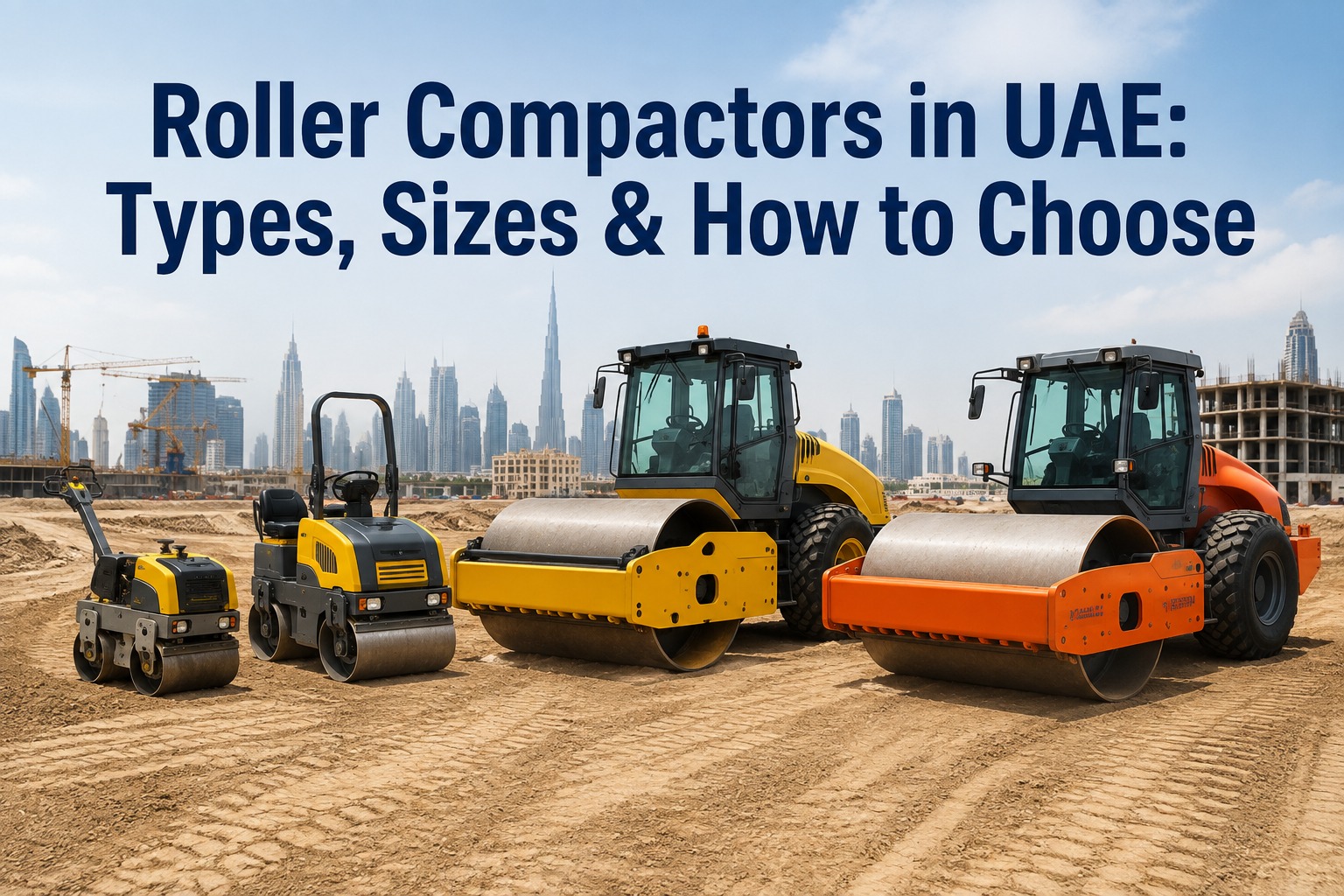
One vibrating drum up front, engine and handles behind. The operator walks it like a heavy mower. This is the workhorse for paths, trench reinstatement, paver bases and small road repairs — big enough to do real compaction, small enough to load on a pickup with a ramp. Our Baylorr BAY-SDR300-H with a Honda engine sits in this class.
Double drum walk-behind rollers
Two vibrating drums, front and back, so every pass compacts twice. On asphalt patches and larger sub-base areas it halves the passes and leaves a cleaner finish, because the rear drum irons out what the front drum did. The Baylorr double drum roller is the step up when the single drum starts feeling slow.
Ride-on tandem rollers
The 1–3 tonne machines you see on road resurfacing. Faster and heavier, with water spray systems for asphalt work. Worth it on continuous road and parking projects; overkill for anything a walk-behind covers.
Heavy soil compactors (5–10+ tonnes)
Single large padfoot or smooth drum machines for bulk earthworks, highways and platform compaction. On projects this size the roller usually arrives with the earthworks subcontractor — most contractors hire rather than own at this weight.
Which Size Does Your Job Need?
| Job | Right machine |
|---|---|
| Paver bases, walkways, trench reinstatement | Walk-behind single drum |
| Asphalt patching, car parks, wider sub-base | Walk-behind double drum |
| Road resurfacing, estate roads | 1–3 tonne ride-on tandem |
| Bulk earthworks, highways, platforms | 5–10+ tonne soil compactor (usually hired) |
Roller or Plate Compactor?
They overlap less than people think. A plate compactor wins in tight spots, against edges, and on small granular areas. A roller wins the moment the area gets long — its continuous rolling contact covers metres of trench or path in the time a plate does one strip, and on asphalt the drum leaves the smooth, sealed finish a plate can't. Many crews run both: the plate for corners and edges, the roller for the runs. If you're weighing compaction machines generally, our plate compactor vs tamping rammer guide covers the other half of that decision.
What to Check Before You Buy
- Engine brand: the same rule as every petrol machine in the UAE — a Honda or Robin engine starts in August and has parts everywhere. It's the difference between a machine and an ornament.
- Drum width vs your typical job: wider drums finish faster but won't fit a narrow trench. Match the drum to your most common width, not your widest.
- Water system for asphalt: if you'll roll asphalt, a working sprinkler system on the drum is not optional — a dry drum picks up hot mix and ruins the mat.
- Vibration on/off: you want vibration for base layers and off for finish passes and near structures. Check the control actually works before money changes hands — it's the most commonly broken switch on used rollers.
- Hydraulics on ride-ons: drive and steering are hydraulic on larger machines; a lazy cylinder or weeping hose is a four-figure repair. Our workshop handles hydraulic repair if you've already got a tired one.
Looking After a Roller in UAE Conditions
Rollers live outdoors in heat and dust, and the failures we see in the workshop are boringly predictable: cooked engines from blocked cooling fins, seized vibration bearings from missed greasing, and scraper bars worn to nothing so the drum carries half the site around with it. A monthly hour of greasing, cleaning and checking costs less than any one of those repairs. When something bigger lets go, our Ajman workshop covers roller servicing and repair for any brand.
What Do Roller Compactors Cost?
Walk-behind rollers in the UAE typically land between AED 15,000 and 35,000 depending on drum configuration and engine, with ride-on machines well beyond that. Exact pricing moves with spec — send us your job type and we'll quote the right machine the same day, with delivery anywhere in the UAE within 48 hours.
Frequently Asked Questions
Compacting soil, sub-base and asphalt over larger or longer areas — paths, trenches, car parks and roads — where a plate compactor would be too slow. The drum's rolling contact also leaves the smooth sealed finish asphalt needs.
A single drum vibrates at the front only; a double drum vibrates front and back, compacting on both contact points every pass. Double drums finish asphalt and larger areas faster and smoother.
Effectively yes — "road roller" usually refers to the ride-on machines used on asphalt, while "roller compactor" covers the whole family including walk-behind units.
Own the size you use monthly — for most contractors a walk-behind. Hire the 5–10 tonne machines for occasional bulk earthworks; they cost too much to sit idle.
Yes. AMACO stocks Baylorr walk-behind single and double drum rollers in Ajman with 48-hour delivery to all Emirates, a one-year warranty, and workshop support including hydraulic repair.