What Is a Plate Compactor and Why Is It Critical on Road Sites?
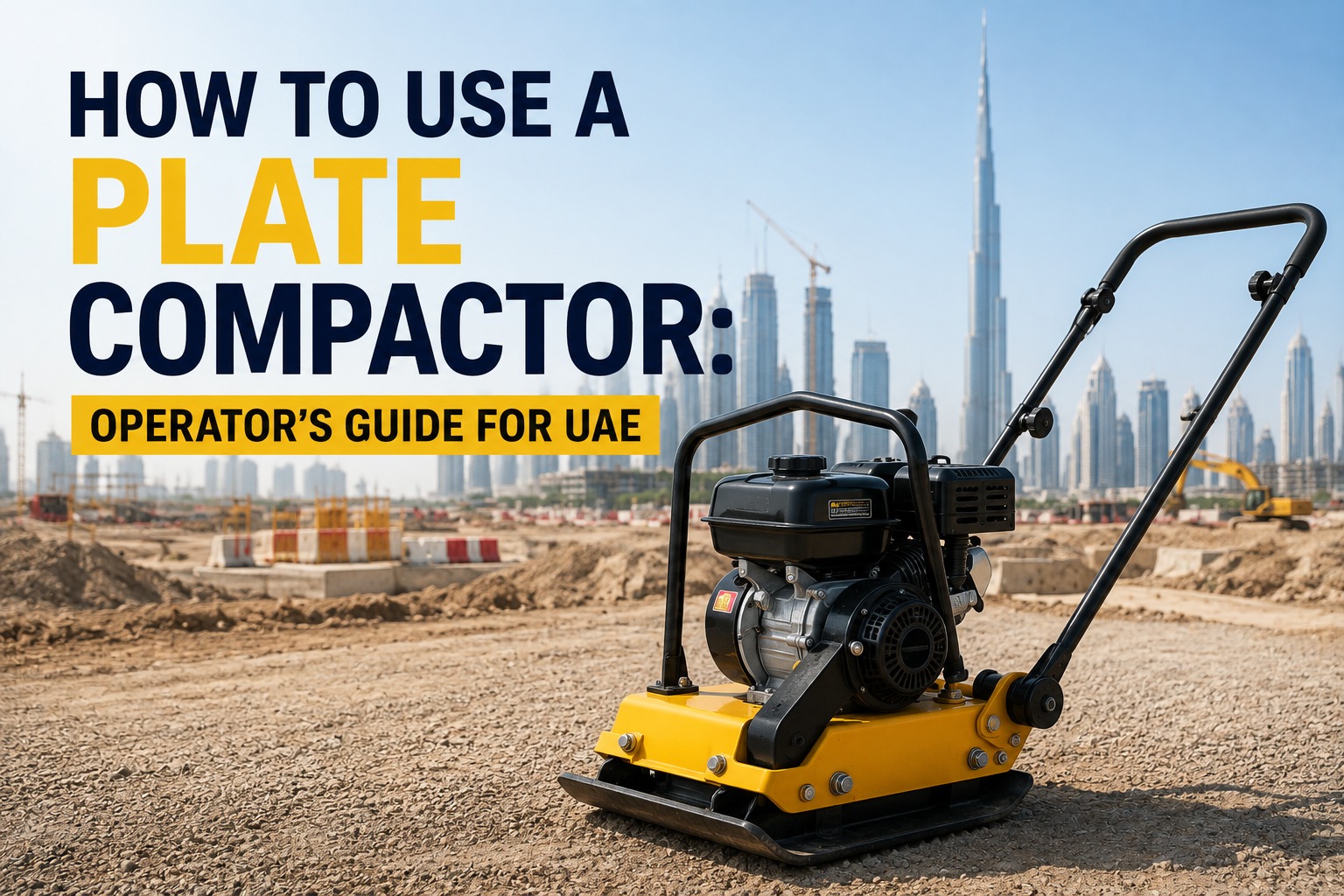
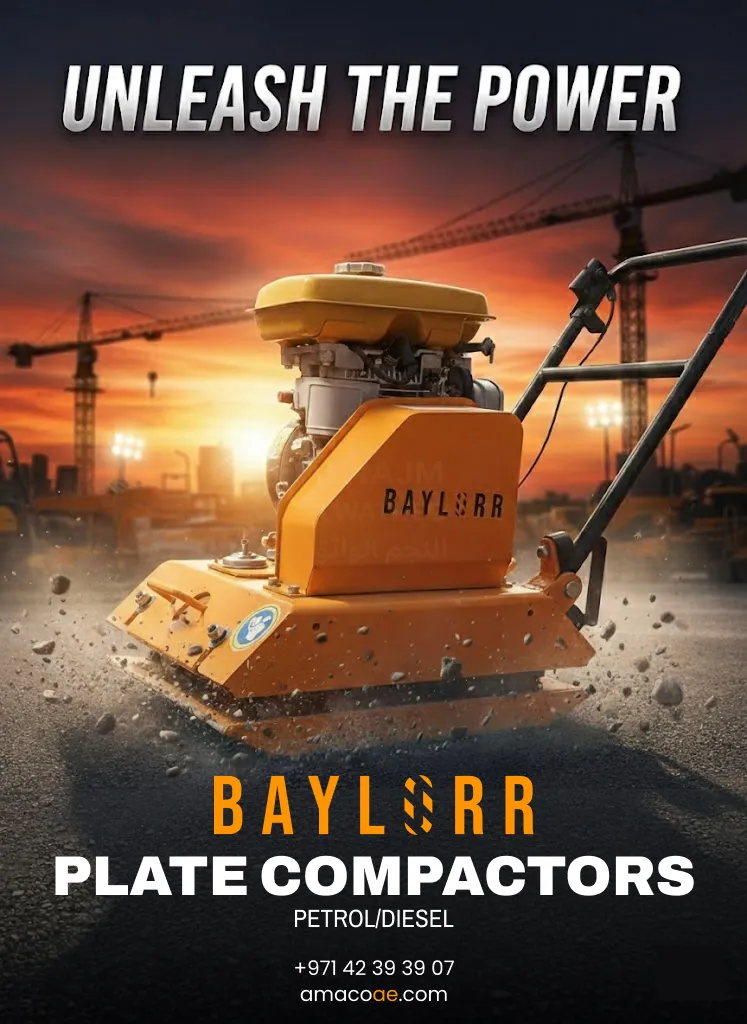
A plate compactor — also called a vibratory plate compactor or compaction plate — is a ground compaction machine that uses a vibrating steel base plate to densify granular soil, sand, gravel, and sub-base material. It is the primary machine used for sub-grade and sub-base compaction on road construction sites across the UAE.
Without proper compaction, road surfaces crack prematurely, pavements sink, and interlock tiles shift — leading to contractual penalties, remediation costs, and project delays. On UAE road sites, where specification compliance and third-party inspection are standard, a failed compaction test can halt an entire work front.
Where Plate Compactors Are Used on UAE Road Projects
- Sub-grade preparation — compacting the natural ground layer before any fill or base course is placed
- Sub-base and base course compaction — achieving the required density before asphalt overlay
- Backfill compaction behind kerbs and drainage channels
- Interlock and paving block bedding layer compaction
- Footpath and cycle track sub-base preparation
- Wide utility trench backfill — where the trench is wide enough for the plate to sit flat
Key Specifications to Check When Buying a Plate Compactor in the UAE
Centrifugal Force (kN)
Centrifugal force is the most important performance specification. It determines how deeply the compaction energy penetrates into the soil layer. For UAE road sub-base applications, look for a minimum of 12–16 kN. Higher-force units (20 kN+) suit thicker compacted layers.
Plate Size and Compaction Width
A wider plate covers more ground per pass. For road base compaction, plates in the range of 500–600mm width offer a good balance of coverage and manoeuvrability. Narrower plates suit confined areas and pathways.
Machine Weight
Heavier machines deliver more static pressure per unit area. For road sub-base work, machines in the 60–100 kg range are standard. Lighter units (60–75 kg) suit surface finishing and interlock work; heavier units handle granular sub-base layers up to 250mm thick.
Engine Type — Petrol vs Diesel
On UAE road sites, petrol-engine plate compactors are the standard choice. They offer ease of starting, lower initial cost, and sufficient power for granular compaction tasks. Avoid electric-only units on open road sites where power supply is impractical.
Vibration Frequency (VPM)
For granular soils and road base materials common in the UAE, a frequency range of 5,500–6,000 VPM is appropriate. Higher-frequency machines (5,800–6,500 VPM) are better suited to surface-layer compaction and interlock work.
On UAE road sites with tight programmes, a failed compaction test can set a work front back by days. The right machine spec eliminates the risk before it happens.
Plate Compactor vs Tamping Rammer
Using a plate compactor in applications that need a tamping rammer is one of the most consistent procurement errors on UAE sites:
- Use a plate compactor for open, flat areas with granular soils — sub-base layers, interlock beds, wide trench backfill, footpaths
- Use a tamping rammer for narrow trenches, cohesive soils (clay, silt), and confined spaces where a plate cannot sit flat
Most UAE road sites require both machines running simultaneously — plate compactors across the road formation while tamping rammers compact drainage trench backfill in parallel.
How Many Units Does a Road Site Need?
- Small road works (up to 500m): 1–2 units
- Medium road packages (500m–2km): 2–3 units, at least one standby
- Large infrastructure contracts (2km+): Multiple units per active work front
What to Ask Your Supplier Before Buying
-
1
Confirm centrifugal force and compaction depth
Request the full technical datasheet specifying centrifugal force (kN) and maximum effective compaction depth for the exact model.
-
2
Verify engine suitability for UAE conditions
Confirm the engine is rated for sustained operation at 45°C+ ambient temperature. Ask specifically — not all datasheets state this.
-
3
Check local spare parts stock
Exciter units, engine components, and belts should be stocked in-country. Confirm before purchase — not after the first breakdown.
-
4
Clarify warranty and service coverage
Understand what the warranty covers and the process for claims before committing to a purchase order.
Frequently Asked Questions
A plate compactor uses vibration across a wide flat plate — suited for granular soils in open, flat areas. A tamping rammer uses high-impact vertical blows through a small shoe — suited for cohesive soils and narrow trenches. Most UAE road sites require both machines for different tasks.
For standard UAE road sub-base compaction in granular materials, a minimum of 12–16 kN is appropriate for layers up to 200mm. For thicker layers or higher-specification road bases, look for units producing 18–20 kN or above.
Yes — petrol-engine plate compactors are the standard on UAE road sites. Confirm with your supplier that the engine is rated for high-ambient-temperature operation. Engines from established platforms such as Honda or Robin/Subaru are well proven in Gulf conditions.
On sites running 8–10 hours per day, check engine oil daily and change per the manufacturer's interval (typically every 50–100 hours). Air filters need more frequent inspection in dusty UAE conditions — check every 25–50 hours. Inspect exciter disc condition monthly on high-use machines.